If I could ask you to change one thing about your skincare, it would be wearing SPF every day. If I could add a second, it would be a good vitamin C serum underneath it.
People often treat the two as either/or, and they aren't. They do different jobs, and they work best as a pair. I've tried and tested thousands of products, and these are the two I'd never let a client skip. Here's why, and how to use them.
Two different jobs
Sunscreen filters ultraviolet (UV) light before it can do its damage. UVB is the main cause of sunburn. UVA reaches deeper into the skin and plays a large part in ageing and pigmentation. The SPF number tells you about UVB protection, and the UVA star rating or UVA logo tells you about UVA.
Vitamin C works differently. It's an antioxidant, which means it helps neutralise unstable molecules called free radicals that UV and pollution create in the skin. It also plays a part in how skin makes collagen, and with regular use it can help skin look brighter and more even. What it can't do is block UV, so it never replaces your sunscreen.
Why they work well as a pair
No sunscreen filters every bit of UV, and many of us apply less than the amount used to test it. An antioxidant layer underneath helps deal with some of what gets through. That's why our practitioners suggest vitamin C in the morning, under SPF.
If pigmentation or sun spots bother you, this pairing matters most. UV encourages your skin to make more pigment, so daily protection helps stop existing marks darkening and new ones forming. It also protects the results of any treatment you have.
Not sure which treatment is right for you?
Answer five quick questions and we will suggest where to start, at the clinic nearest you.
Your morning routine
A simple order that suits most skin:
- Cleanse gently, or just rinse if your skin is dry.
- Apply a few drops of vitamin C serum to dry skin and let it sink in for a minute.
- Add a light moisturiser if you need one.
- Finish with a sunscreen of SPF 30 or higher with at least 4-star UVA protection. Two finger lengths is a useful guide for the face and neck.
- Reapply every two hours when you're outside, and after swimming, sweating or towel drying.
- On bright days, add a hat, shade and sunglasses, because sunscreen works best alongside them.
Choosing a vitamin C you'll actually use
Vitamin C comes in several forms. Pure ascorbic acid, often listed as L-ascorbic acid, is the best known, but it can tingle and breaks down more easily. Forms such as sodium ascorbyl phosphate and ascorbyl glucoside tend to be gentler and more stable. A few practical tips:
- Look for opaque or airless packaging, and keep the bottle away from heat and sunlight.
- If the serum turns dark orange or brown, it has oxidised and it's time to replace it.
- Mild tingling is common with ascorbic acid. Stinging that doesn't settle is a sign to try a gentler form.
- If your skin reacts easily, try a new product on a small area for a few days first.
Treatments that work alongside your routine
If uneven tone or sun damage is what bothers you most, an Advanced In-Depth Skin Analysis is a good first step. Our scanner photographs your skin in ultraviolet, standard and polarised light, which can show sun damage that's hard to see in the mirror. Your practitioner can then choose a vitamin C and SPF to suit your skin from the ZO Skin Health and AlumierMD ranges we stock.
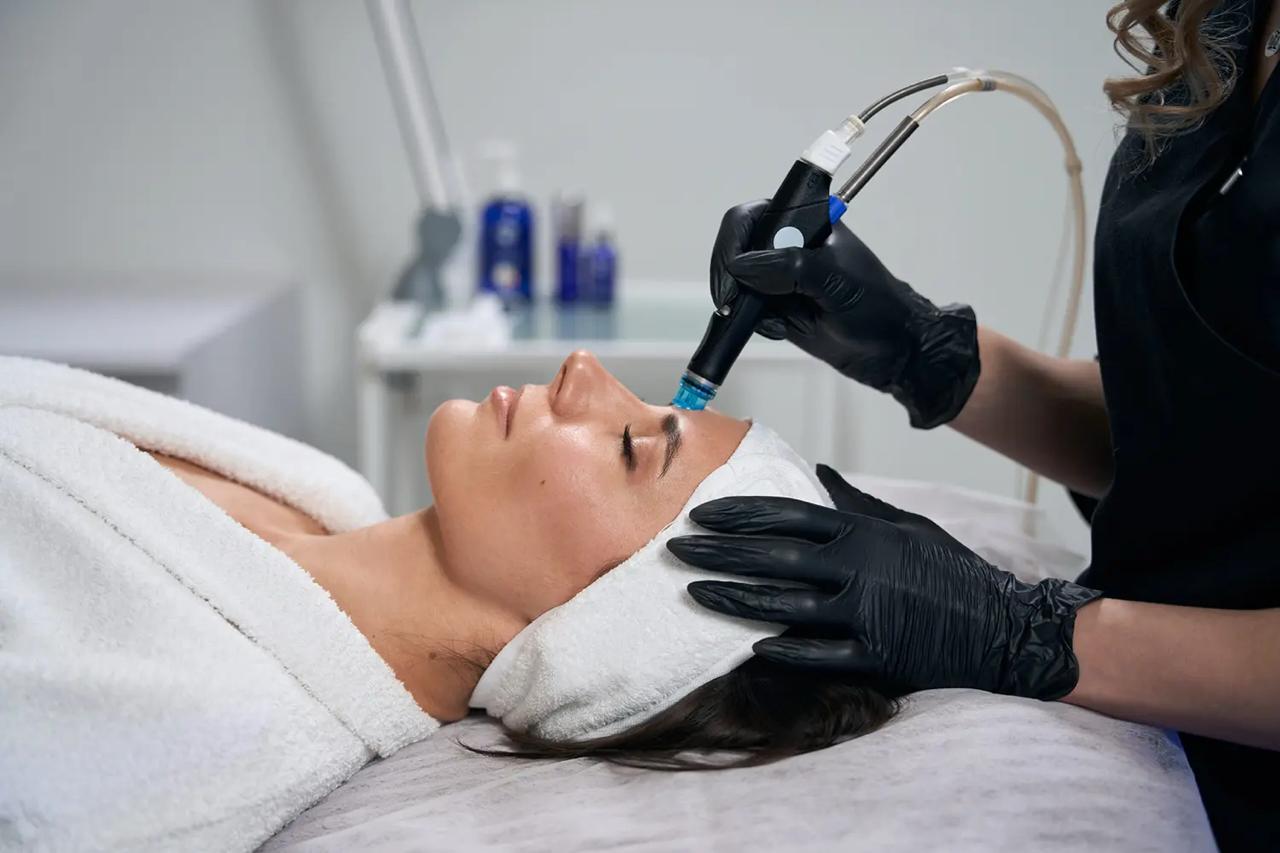
In clinic, a HydraFacial, at Chichester and Petersfield, can include a booster serum chosen for dark spots or dullness, with no downtime. For well-defined sun spots, laser pigmentation treatment is available at Chichester after a patch test, for all skin types and tones. Whatever you choose, daily SPF is what protects your results.
Who should take care
If you have sensitive skin, rosacea or eczema, ask us before starting vitamin C, as some forms can sting. If you take or have recently taken prescription skin medication, tell us at your consultation, because some medicines make the skin more sensitive to light. If you're pregnant or breastfeeding, mention it before any treatment so your practitioner can plan around it. If you notice a mole or mark that's new or changing, or one that bleeds, itches or won't heal, please see your GP rather than treating it cosmetically.
Questions clients ask
Is the SPF in my make-up enough?
Usually not on its own. You'd need to wear far more foundation than most people do to get the protection on the label. Use a proper sunscreen first and treat make-up SPF as a bonus.
Can I use vitamin C at night instead?
You can, and it still supports brightness. Many people prefer the morning because its antioxidant role pairs well with sunscreen during the day. If you use retinol, keep that for the evening.
Do I really need SPF in winter?
Yes. Our practitioners recommend it, and so do I. UVB is weaker during a UK winter, but UVA is present all year and passes through cloud and window glass, so daily SPF is still worth it, especially if you're treating pigmentation.
Will vitamin C fade my dark spots?
Used every day for a few months, alongside SPF, it can soften the look of dark spots a little. Deeper or long-standing pigmentation usually needs professional treatment as well, and results vary from person to person.

About the author
Tanisha Allen
Group Founder, Skin Expert
Founded the Group and still treats clients across its clinics. Leads the injectables side, teaches at the Academy and assists in the Group’s cosmetic plastic surgery.
More about TanishaRelated concerns: Pigmentation, Sun Damage, Dull Skin
This guide is general information, not medical advice. Results vary from person to person, and your practitioner will check what is suitable for you at your consultation.