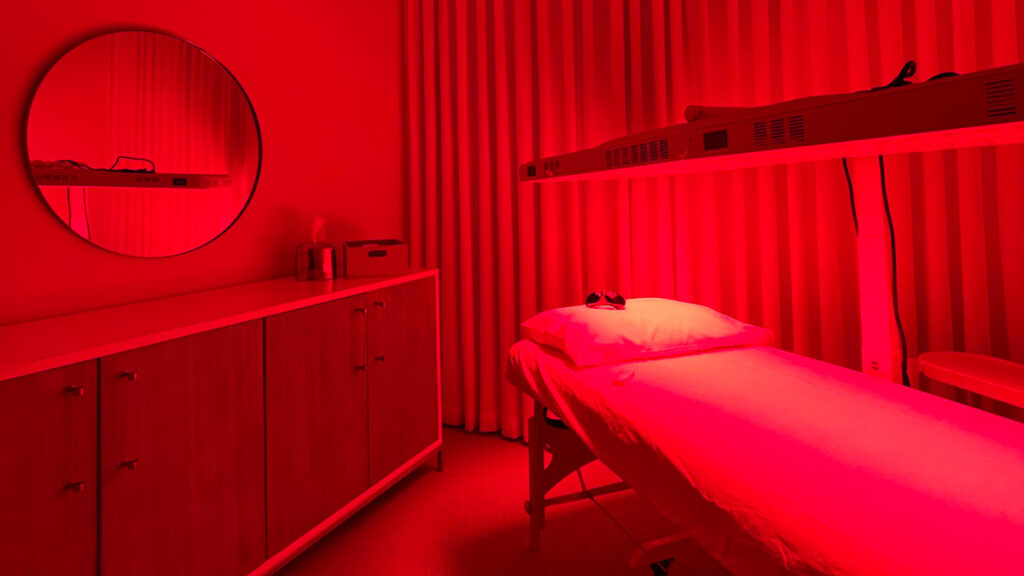
Red Light & Near-Infrared Therapy
660nm red and 850nm near-infrared light across the body, in a calm, needle-free session, with an in-depth consultation first
Our panel combines 660nm red light with 850nm near-infrared light, delivering light across the body during a relaxing session. It is a dedicated body panel, separate from the LED we use for facials. You lie back and rest for about 20 minutes, and most people find it calm, with some noticing a gentle warmth on the skin. Before your first session we check the treatment is suitable for you, including any medicines, creams or gels you use. Light therapy is not a replacement for medical care, and results vary from person to person.
Red and near-infrared light
Photobiomodulation, the scientific name for red and near-infrared light therapy, has been researched for its effects on cellular activity, circulation, inflammation, muscle function and tissue recovery.
Red light, 660nm
Visible deep red light, absorbed mainly within the first few millimetres of skin, with only a tiny fraction travelling further. It is also popular in skin treatments for supporting cell turnover, collagen and skin repair.
Near-infrared light, 850nm
Light just beyond what the eye can see, delivered alongside the red light in the same session. It travels further than red light but fades quickly, with most of it absorbed within the first centimetre of tissue.
Steady and gentle
The light is steady and does not flash. Eye protection is provided and worn throughout every session.
Depths are based on laboratory and computer models and vary from person to person, for example with skin thickness and skin tone. Only a small amount of light reaches deeper tissue such as muscle.
Red light for body and mind
Our clients book red and near-infrared light sessions for many reasons, often as part of a wider wellness or fitness routine.
Muscle Recovery
Helping your body recover following exercise and physical activity.
Muscle Relaxation
Supporting relaxation of tired, tight or fatigued muscles.
Pain & Joint Comfort
Helping to temporarily relieve minor muscle and joint pain and stiffness.
Circulation
Temporarily increasing local blood circulation.
Physical Performance
Supporting recovery and readiness between training sessions.
After Surgery
Photobiomodulation has been researched for supporting recovery after surgery. We offer sessions after surgery only with your surgeon's agreement.
Wound Healing
Light therapy has been researched for supporting wound healing. We never use it over open, infected or bleeding skin.
Overall Wellbeing
A relaxing, restorative experience for both body and mind.
Recovery Routines
An easy addition to your wider wellness, fitness and recovery programme.
Skin
Red light is also popular for supporting cell turnover, collagen and skin repair.
Results vary from person to person. Light therapy is not a replacement for medical care, and we check it is suitable for you before your first session.
Is light therapy right for you?
Light therapy suits people who would like a calm, needle-free session as part of looking after themselves. It is not a replacement for medical care, and our consultation is not a medical examination. If your pain is new, severe, getting worse, follows an injury or has lasted more than a few weeks without being checked, please see your GP or a physiotherapist first, or call NHS 111 if you need help urgently. Some symptoms need a 999 call, and we list them in the questions on this page. In many areas you may be able to refer yourself to NHS physiotherapy without seeing your GP.
Everyday aches: what to know before you book
If you are thinking about red and near-infrared light because of an everyday ache, here is what a session involves and what the research does and does not show, so you can decide whether it is right for you.
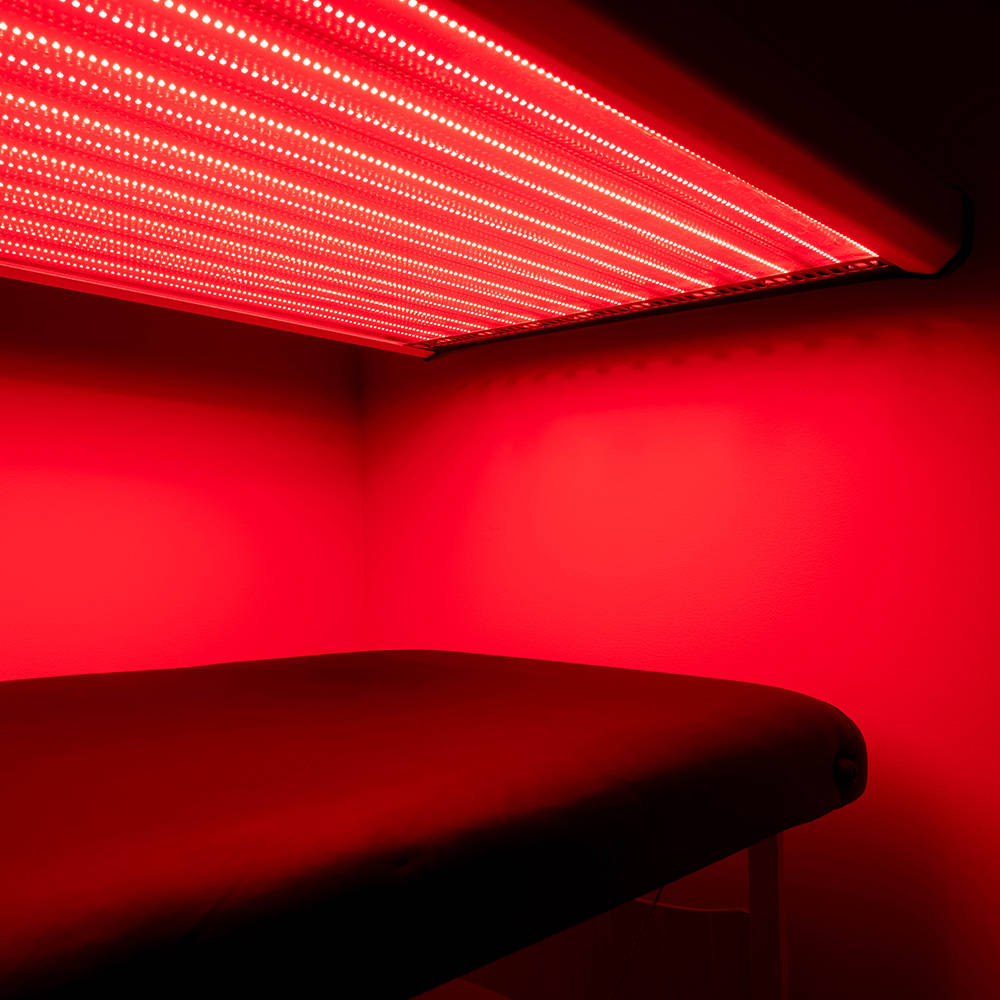
Our panel delivers 660nm red and 850nm near-infrared light across the body. After an in-depth consultation at your first visit, you lie comfortably on the couch and the panel is positioned a short distance from your body, whether you would like to focus on your back, shoulders and neck, legs or a full-body session. The light runs for about 20 minutes, with goggles on throughout.
Research into red and near-infrared light for aches and pains is still developing, and the results so far are mixed. Most studies have used medical lasers aimed at specific points rather than LED panels. Some reviews of these laser studies have reported a small, short-term reduction in certain types of pain, while others have found no worthwhile benefit. Those results cannot be assumed to apply to LED light. There are far fewer studies of LED panels, and we are not aware of any published research testing our panel on pain. We cannot promise that sessions will ease your discomfort, and any effect may be temporary.
At each visit we ask you to score how the area feels and whether you have noticed anything new, so that together we can see honestly whether the sessions are making a difference. Many aches ease on their own over a few weeks, so we will talk openly about what any change might mean. If your pain is getting worse, we will pause your sessions and suggest you see your GP or a physiotherapist. Light therapy can sit alongside exercise, physiotherapy and anything your GP has advised. It does not replace them.
Where the light can be used
Full-body sessions, or a focus on the back, shoulders and neck, hips and legs, knees, or arms and hands.
Tracked at every visit
We note how the area feels before each session and review it with you after six, so decisions are based on your own experience.
Alongside your care
Keep up any exercises, physiotherapy or medicines you have been advised, and never stop a prescribed medicine to have light therapy. Please tell us about everything you take, as some medicines make the skin sensitive to light and some mean we cannot treat you.
When to see a GP first
If your pain is new, severe or getting worse, has lasted weeks without being checked, follows an injury, or comes with numbness, weakness, fever or feeling unwell, please see your GP or call NHS 111 before booking. For chest pain, or back pain with numbness or weakness in both legs, numbness around your genitals or bottom, or bladder or bowel changes, call 999.
NICE, which advises the NHS, says laser therapy should not be offered for osteoarthritis because there is not enough evidence that it helps. It has not recommended laser therapy for low back pain, or for long-term pain that has no clear underlying cause, and has said more research is needed. NICE has made no recommendation on LED light therapy for these conditions.
A short course, reviewed honestly
We offer light therapy as single sessions or as a course, usually twice a week. We review how you are getting on after six sessions, and we will tell you honestly if it is not making a difference for you.
Red and Near-Infrared Light, Course of 6
Full-body or focused sessions
- Sessions
- 6
- Spacing
- Usually twice a week
Individual session value £390
Book your course- In-depth consultation
We talk through your needs, health and any medicines, check that light therapy suits you, and tell you if you should see your GP first.
- Sessions 1 to 3
About 20 minutes under the panel, with goggles on.
- 3 to 4 days
- Sessions 4 to 6
The same focus at each visit, so we can see how you are getting on.
- 3 to 4 days
- Review
An honest conversation about whether to continue, or whether a GP or physiotherapist would be a better next step.
Results vary from person to person, and light therapy is not a replacement for medical care.
Red and Near-Infrared Light, Course of 12
For clients continuing after their review
For clients who would like to continue after their six-session review, planned together at your appointment.
Courses are prepaid treatment programmes, valid for 12 months from purchase. Klarna is available where offered through our payment system, subject to eligibility.
Available at our Chichester, Petersfield and Bognor clinics.
What to Expect
Preparation
Your first visit starts with a consultation to check that light therapy is suitable for you. It is not a medical examination and cannot find the cause of your pain. We go through your health history and everything you take, including medicines, supplements such as St John's Wort, and any creams or gels. Some medicines make the skin more sensitive to light, including certain antibiotics, acne tablets and some medicines for arthritis or psoriasis. With some of these we cannot offer light therapy while you are taking them, or at all. Please never stop or change a prescribed medicine in order to have light therapy. Light therapy is not suitable if you have epilepsy or seizures triggered by light, lupus, porphyria or another light-sensitive condition, or if you have active cancer or are having cancer treatment. If you have had cancer in the past, we will ask for your doctor's agreement first. We do not offer it during pregnancy. After having a baby, please wait until you have had your postnatal check, and if you are breastfeeding, check with your GP first. We do not use the light over broken, infected or sunburnt skin, or over any lump that has not been checked by a doctor. Please tell us if you have glaucoma, cataracts or recent eye surgery, get migraines triggered by light, or have a tattoo in the area, and please do not put pain relief gel, cream or perfume on the area on the day.
Your Treatment
You lie comfortably on the couch while the panel delivers red and near-infrared light across the body, with protective goggles on throughout. You may feel a gentle warmth. The light itself runs for about 20 minutes.
Aftercare
The treated skin can look slightly pink and feel warm for an hour or two, and rarely some people get a temporary headache. There is no downtime, so you can go straight back to your day. Please carry on with any treatment your GP or physiotherapist has recommended. If the treated skin develops a rash or changes colour, please tell us before your next session. If your pain gets worse, or you notice anything new such as numbness, weakness or fever, please contact your GP or NHS 111 rather than waiting for your next session or your review.
Frequently Asked
Ready for Red Light & Near-Infrared Therapy?
Book a consultation to discuss your goals and create a personalised treatment plan tailored just for you.